The Medina & Souks
Marrakech's walled old city — 1,000 years of trade, Djemaa el-Fna, the spice market, the dye vats of the tanners, and the finest riads in Morocco.
The essence
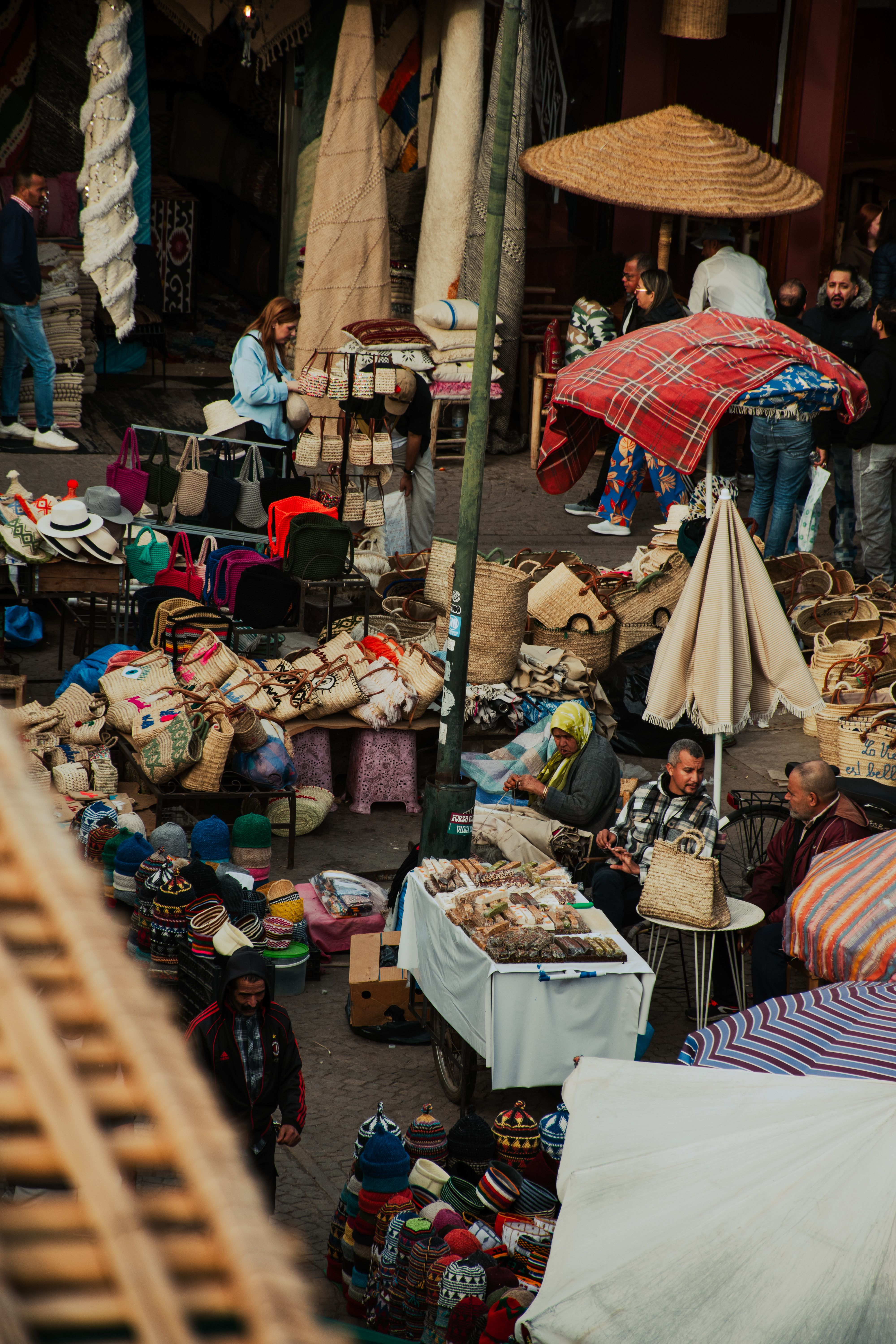
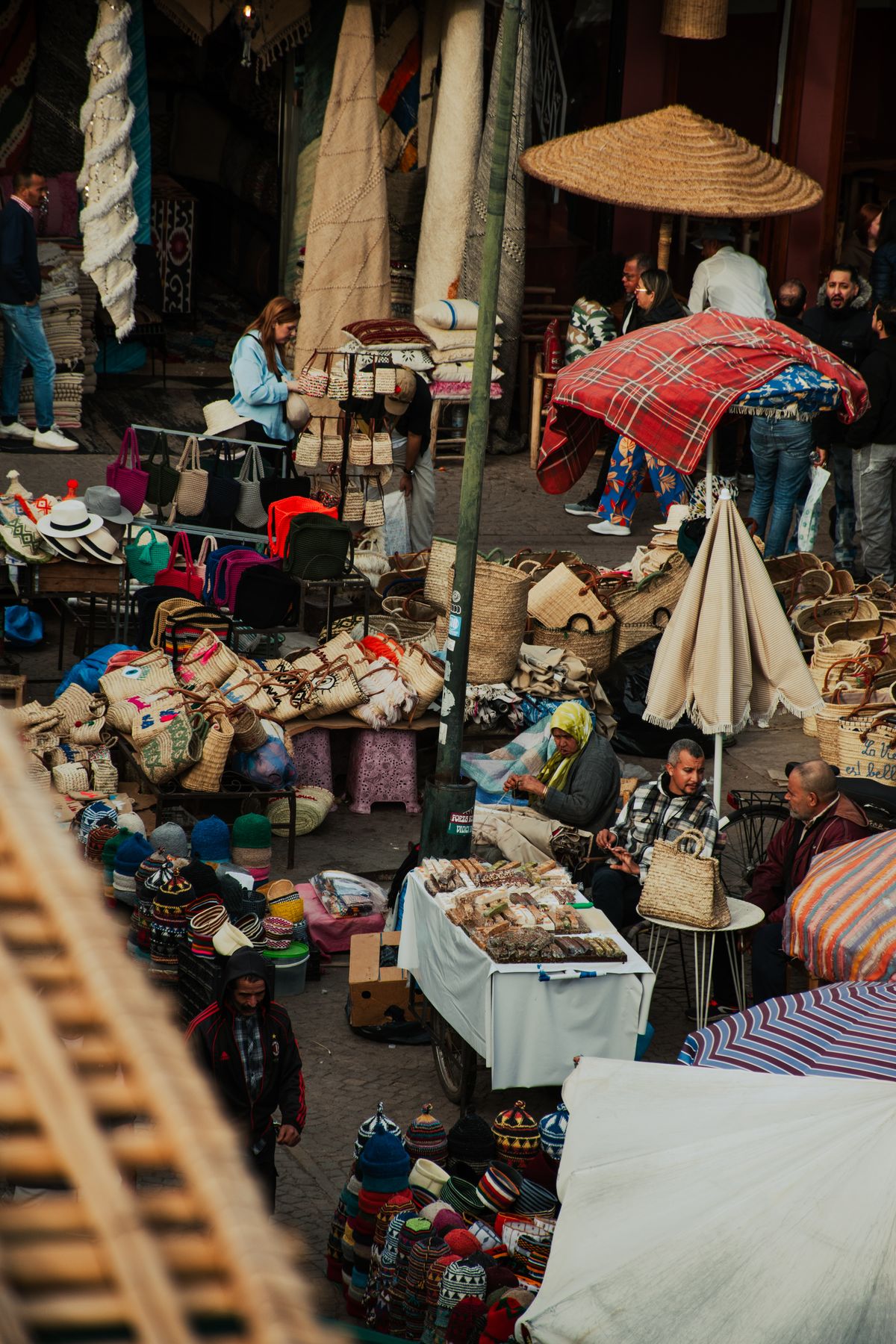
Marrakech overwhelms you at first. The Djemaa el-Fna — the main square — is a performance that runs continuously: acrobats, snake charmers, storytellers, orange-juice sellers, and the smoke of a hundred makeshift grills. The souks behind it go on for kilometres, arranged by trade as they have been for centuries: the dyers in their vats of saffron and indigo, the spice merchants with their mountains of ras el hanout, the leather tanners whose smell announces them from 100 metres away. And then there are the riads — courtyard houses converted to hotels — where the door closes on the medina and everything becomes cool marble, orange blossom, and silence.
Starting from
₹1,99,000
per person · custom itinerary
Best season
March–May and September–November. Avoid July–August (extreme heat). December–February is cool and clear with excellent light.
Culture & History
Marrakech is layered with history that the souks make visible. The city was founded by the Almoravids in 1070 and has been a trading hub for sub-Saharan gold, salt, and enslaved people since the medieval period. The Bahia Palace, built in the late 19th century for the Grand Vizier, is a masterwork of Moroccan craft: cedar wood carved by hand, zellij tilework floors, painted plaster ceilings, and room after room of courtyard gardens. Berber culture — the indigenous culture of North Africa, predating Arab influence — is everywhere in the markets: Berber carpets, Berber jewellery, and the amazigh script written on walls and shop fronts alongside Arabic. The French colonial period (1912–1956) left behind the Ville Nouvelle, the modern city adjacent to the medina, with its boulevards and cafés.
Why go
The most sensorially rich city in the Islamic world — a red-earth labyrinth where every wooden door hides a garden riad.
One of the only medina cities where craft (metalwork, tannery, weaving, ceramics) is still practiced within its 12th-century walls, not moved to industrial zones.
The gateway to three distinct escapes in one trip: the Atlas Mountains, the Agafay Desert, and the Atlantic coast at Essaouira — all under three hours from the medina.
When to travel
Every destination has its perfect window — and its quiet secrets. Our team plans around weather, festivals, and hotel availability so your journey lands in the sweetest possible month.
March – May
Perfect. Warm days, cool nights, blossoming Jacaranda, and the Rose Festival in the Dades Valley.
September – November
Post-summer heat, harvest at the vineyards of Meknes, and clear Atlas hiking weather.
December – February
Cool, quiet, and beautifully atmospheric — riads glow in the winter light. Bring layers for evenings.
June – August
Punishingly hot (40°C+). Only for travellers heading straight to the coast or high Atlas.
Who this is for
First-time visitors to North Africa — Marrakech is safe, walkable, and English-friendly at the top-end riads.
Design and interiors lovers — the riads themselves are as impressive as any museum.
Photographers and food writers — the sensory density is unmatched in a compact medina footprint.
Common questions
Places to explore
The Medina & Souks
Marrakech's walled old city — 1,000 years of trade, Djemaa el-Fna, the spice market, the dye vats of the tanners, and the finest riads in Morocco.
Jardin Majorelle & Ville Nouvelle
Yves Saint Laurent's cobalt-blue art deco garden and the French colonial new town with its cafés and the Museum of Moroccan Arts.

Atlas Mountains Day Trips
The Atlas Mountains begin one hour from Marrakech — Berber villages, the Ourika Valley, and Toubkal National Park for day hikes or overnight treks.
Signature moments
Curated journeys
 Affordable
6 days · from ₹1,53,000
Six days of color, spice, and mountain air without the luxury markup — done with taste.
Continue exploring