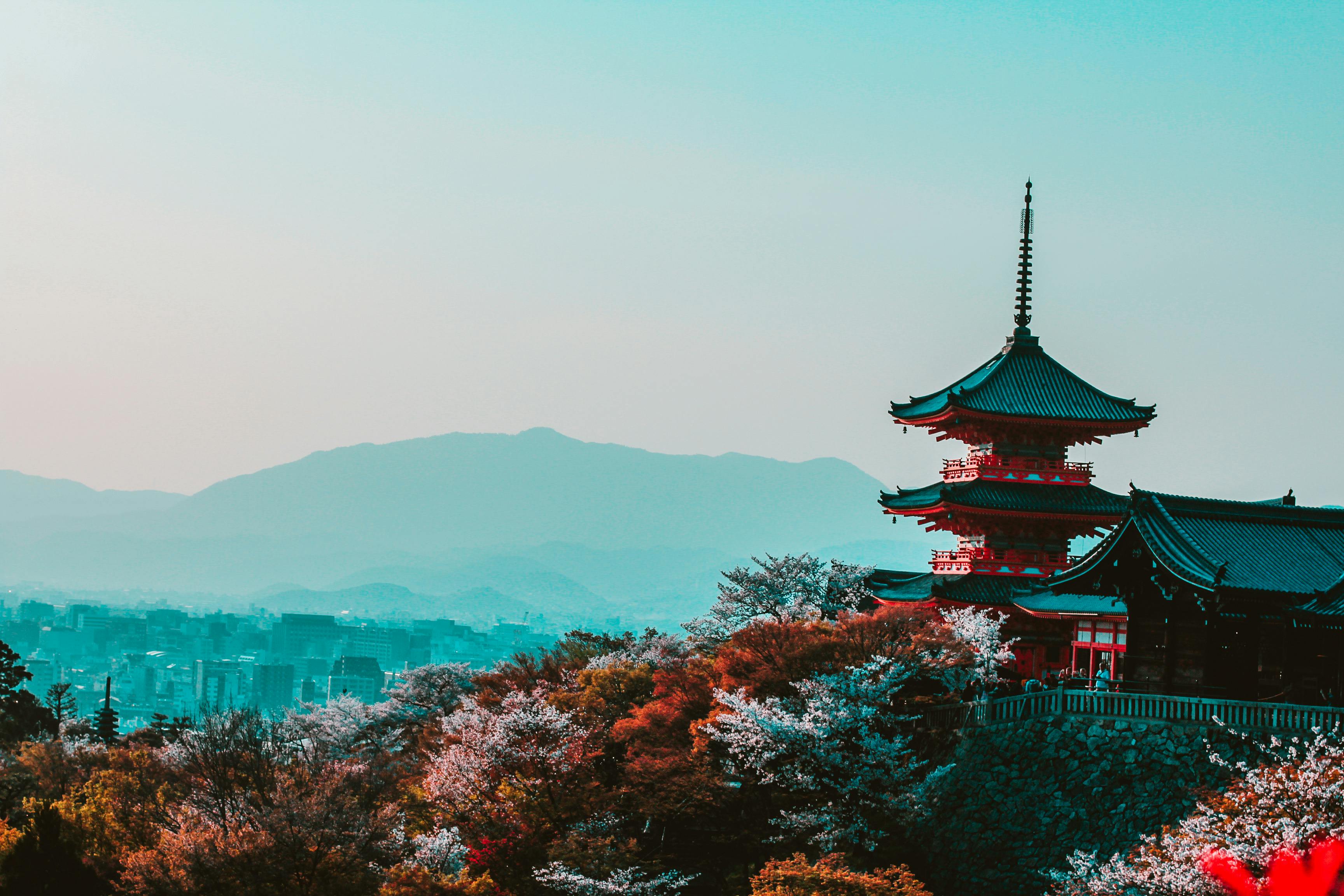
Gion & Higashiyama
Kyoto's best-preserved historic districts — stone-paved lanes, machiya townhouses, and the city's geisha culture centred on Hanamikoji Street.

The essence
Kyoto is what people mean when they say Japan. Seventeen UNESCO World Heritage Sites within a single city's boundaries. More traditional wooden machiya townhouses than anywhere in Japan. The Gion district, where geiko (geisha) and maiko (apprentice geisha) still move between ochaya teahouses in a practice that has remained essentially unchanged for 400 years. And yet Kyoto is not a museum — it is a living city of 1.4 million people, with a restaurant scene, a contemporary craft movement, and a coffee culture that sits alongside the Buddhist ceremony and the temple gardens without contradiction.
Starting from
₹3,15,000
per person · custom itinerary
Best season
March–April (cherry blossom). October–November (autumn colour). Both are crowded. June is rainy but beautiful. January–February is cold, quiet, and atmospheric.
Culture & History
Kyoto was Japan's imperial capital for over a thousand years, from 794 AD to the Meiji Restoration in 1869. In that time it accumulated the institutions, temples, and aesthetic traditions that define Japanese culture at its most refined. The tea ceremony, ikebana flower arranging, Noh theatre, and the philosophy of wabi-sabi (finding beauty in imperfection) all have deep roots in Kyoto's history. The city was deliberately spared by the Allies in World War II, partly on the advice of art historian Langdon Warner, which is why its wooden architecture survived. Walking through the Higashiyama district — stone-paved lanes, paper lanterns, cedar-scented temple approaches — feels like moving through a different century.
Why go
Seventeen UNESCO World Heritage sites in one walkable city — more concentrated cultural heritage per square mile than anywhere in Asia.
The last place on earth where geisha still train, tea ceremony is still practiced daily, and 1,200-year-old temples still function as monastic residences.
A four-season city: cherry blossom in April, fire festivals in August, maple illumination in November, snow-quiet gardens in January — the itinerary changes entirely with the calendar.
When to travel
Every destination has its perfect window — and its quiet secrets. Our team plans around weather, festivals, and hotel availability so your journey lands in the sweetest possible month.
Late March – early April
Sakura (cherry blossom) — book 6 months out. Otherwise Aman Kyoto and Hoshinoya are impossible.
Mid-November
Momiji (maple) illumination at Kiyomizu-dera and Eikan-do. Cooler, drier, and every bit as photogenic as sakura.
January – February
Snow on the temple roofs. Zen at its most contemplative, and hot spring stops en-route feel earned.
May – June
Rainy season begins in mid-June, but early May is a hidden window — azaleas at Sanzen-in, empty temples.
Who this is for
Serious travellers seeking depth over checklists — Kyoto rewards those who slow down.
Design-literate couples who love craft, ryokan hospitality, and kaiseki cuisine.
Solo travellers on a first Asia trip — the city is remarkably safe, orderly, and welcoming.
Common questions
Places to explore
Gion & Higashiyama
Kyoto's best-preserved historic districts — stone-paved lanes, machiya townhouses, and the city's geisha culture centred on Hanamikoji Street.

Arashiyama
The western hills — bamboo grove, Tenryu-ji garden, the Oi River, and monkey park on the hillside above.
Nishiki Market & Fushimi
Nishiki — Kyoto's narrow 'kitchen street' — and Fushimi Inari with its 10,000 vermillion torii gates climbing into the cedar forest.
Traveller stories
1 verified review from travellers who've completed this journey.
Cherry blossoms + private tea house = perfection
The ryokan selection was inspired — a centuries-old inn with a private onsen. Passage Pioneer arranged a private tea ceremony with a master who has practised for 40 years. Unforgettable.
— Laura & Finn Jacobsen
Signature moments
Curated journeys
Bespoke14 days · from ₹9,30,000
An expert-curated two-week arc connecting Japanese serenity with Patagonian wilderness. Tailored to you.
Continue exploring