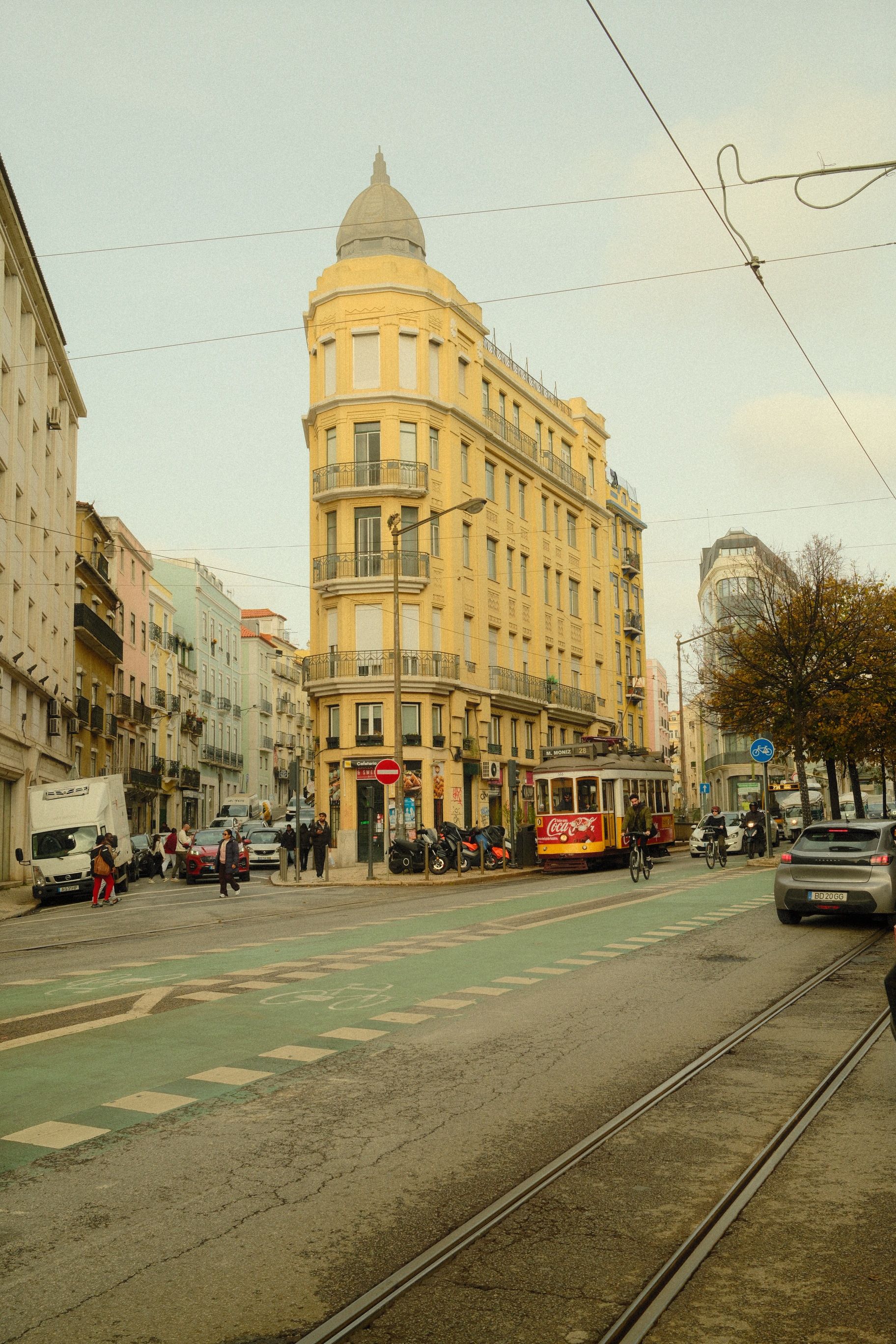
Alfama & Mouraria
Lisbon's oldest neighbourhood — Moorish-origin lanes, São Jorge Castle, the fado tradition, and the best miradouros in the city.

The essence
Lisbon is the European city that gets under your skin without quite announcing why. The seven hills. The light that comes off the Tagus river in the late afternoon and makes the azulejo-tiled facades look almost amber. The No. 28 tram that climbs through Alfama's impossibly narrow lanes. A glass of Vinho Verde in a miradouro (viewpoint) as the city turns golden below you. The fado singer in a candlelit Alfama restaurant whose song sounds like rain and longing. Lisbon is small enough to walk across in a day and deep enough to take a week to understand.
Starting from
₹1,57,000
per person · custom itinerary
Best season
April–June and September–October. July–August is hot and crowded but the best beach weather for the Cascais coast.
Culture & History
Lisbon's culture is defined by its relationship with the sea. The Age of Discovery (15th–16th centuries) launched from the Tagus estuary at Belém, and the wealth that flowed back built the Jerónimos Monastery and the Torre de Belém — two of Portugal's greatest monuments. Fado, the melancholic Portuguese vocal tradition, was born in the waterfront taverns of Alfama and mourns precisely that golden age. The Manueline architectural style — Gothic, interwoven with nautical motifs of ropes, coral, and armillary spheres — is unique to Portugal and visible everywhere in Lisbon's older buildings. The Portuguese Discoveries also left behind a food culture that absorbed spices, dried fish, and cooking techniques from four continents.
Why go
The most affordable of Europe's great capitals — a UNESCO-heritage city with Michelin dining, boutique riads-of-the-west, and a Mediterranean climate at Atlantic prices.
One of the last European cities where 'authentic' still lives in the centre — Alfama's fado houses, Belém's pastel de nata queues, Bairro Alto's tiled taverns all remain resident-first, tourist-second.
The perfect base for triangulating three worlds in a week: Lisbon (city), Sintra (fairytale palaces), and the Alentejo (wine country) — all within 90 minutes.
When to travel
Every destination has its perfect window — and its quiet secrets. Our team plans around weather, festivals, and hotel availability so your journey lands in the sweetest possible month.
April – June
Peak jacaranda bloom, warm days, cool Atlantic breeze — the city's most photogenic window.
September – October
Post-summer light, wine harvest across the Douro and Alentejo, empty beaches at Comporta.
November – March
Mild, quiet, and blue-skied on most days — the sharpest deals at the boutique hotels of Baixa and Príncipe Real.
July – August
Hot and crowded. Best only if pairing with the Algarve or a Douro river cruise.
Who this is for
First-timers to Iberia — Lisbon is walkable, affordable, and open-hearted.
Foodies chasing pastel de nata, seafood rice, and the Michelin surge across Alcântara and Marvila.
Design and architecture travellers — Álvaro Siza's work, the Berardo Collection, and the tile museum are quiet stars.
Common questions
Places to explore
Alfama & Mouraria
Lisbon's oldest neighbourhood — Moorish-origin lanes, São Jorge Castle, the fado tradition, and the best miradouros in the city.

Sintra
The fairy-tale hill town 40 minutes from Lisbon — Pena Palace, the Moorish Castle, Quinta da Regaleira with its initiation well.

Belém & LX Factory
The Tagus waterfront at the city's western edge — Jerónimos Monastery, Torre de Belém, and the Sunday market at LX Factory.
Signature moments
Curated journeys
 Affordable
4 days · from ₹1,07,000
A perfectly paced city break — fado, pastel de nata, ocean light, and a day in Sintra's fairy-tale palaces.
Continue exploring


