Best Time to Visit Bhutan — A Month by Month Guide
Bhutan's permit system and dramatic seasons mean timing is everything. Here's how to get it right.
Bhutan is unlike any other destination on earth — not just for its protected landscapes and ancient dzong monasteries, but for the way it controls who visits and when. The famous Daily Sustainable Development Fee (SDF) filters the crowd, and every traveller must book through a licensed tour operator. But within this structure lies a country of staggering beauty that changes dramatically month by month.
October and November — The Pinnacle of Travel
If there is a perfect time to visit Bhutan, it is October and November. The monsoon has fully withdrawn, the skies are an almost indecent shade of blue, and the mountains — including the north face of Jomolhari and the Gangkhar Puensum massif — are crystalline and close. Temperatures are comfortable at valley level (10°C to 20°C) and the harvest season fills the terraced rice paddies with amber and gold. Paro Tsechu, one of Bhutan's most celebrated festivals, typically falls in late October or November, bringing mask dances, silk thangkas unfurled from monastery walls, and a stillness that is simultaneously ancient and immediate.
March and April — Spring Rhododendrons and Tiger's Nest
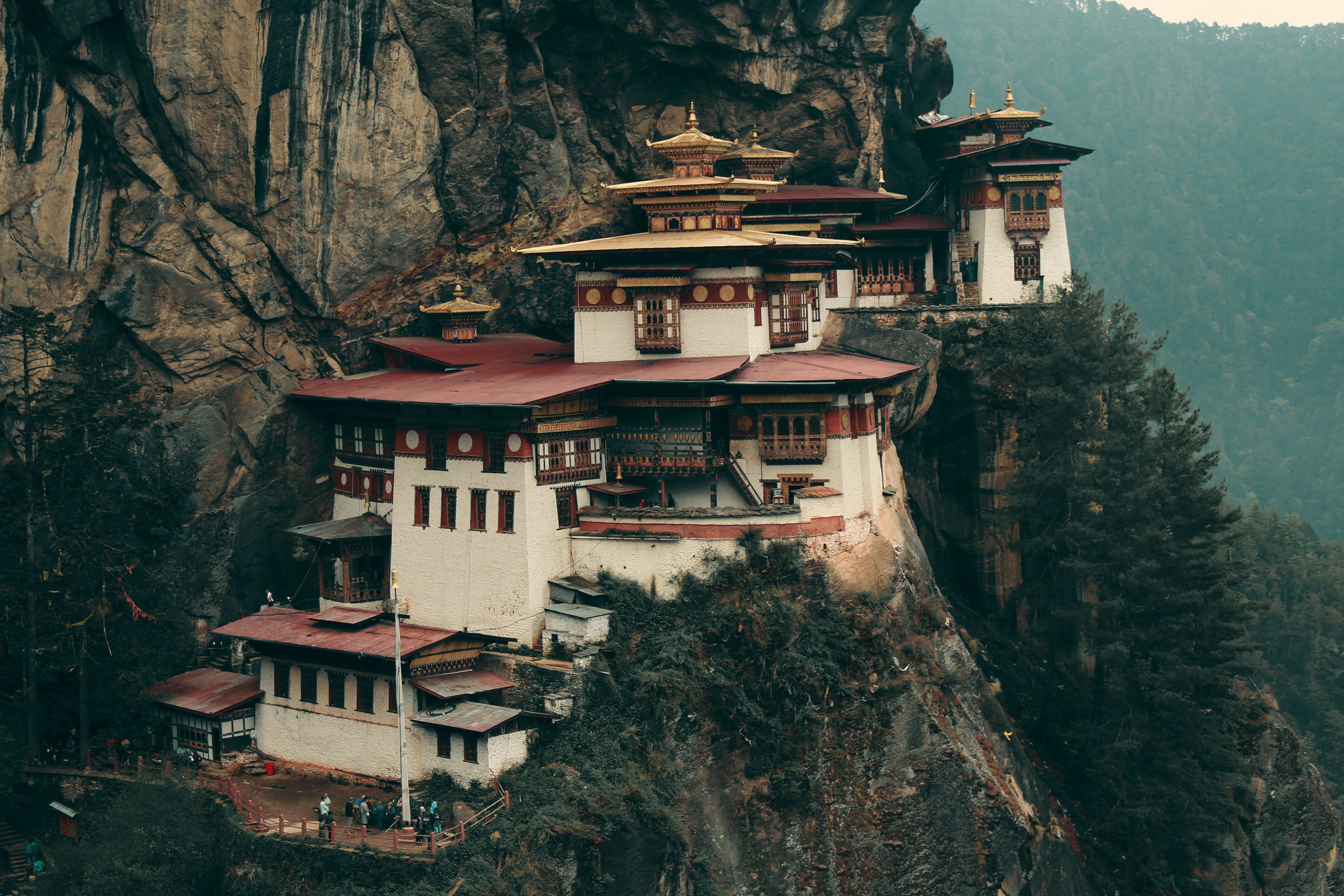
Spring is Bhutan's second-best window. The high passes begin to thaw and the forests explode with rhododendrons — over 300 species grow in Bhutan, from deep crimson to the ghost-white varieties found above 3,800 metres. The Paro Tsechu festival also sometimes falls in spring depending on the lunar calendar. This is when the famous Tiger's Nest Monastery hike is most photogenic: pale prayer flags against a pink flower-filled hillside, mist still threading through the pine valleys below. Allow three to four days in Paro alone.
December through February — Cold but Uncrowded
Winter in Bhutan is cold but rarely prohibitive for cultural travel. Thimphu and Paro valley floors receive little snow; roads mostly remain clear. The advantage is near-empty monasteries and dzongs — you can stand in the courtyard of Punakha Dzong, built at the confluence of two rivers, without another visitor in sight. The black-necked cranes also overwinter in the Phobjikha Valley from late October to March, making this season special for wildlife-minded travellers. Rates are typically lower, and private guides are more available.
The Months to Avoid
June, July, and August sit deep inside monsoon season. Passes become muddy and dangerous, leeches appear on forest trails, and visibility in the valleys is often closed by cloud for days at a stretch. Internal flights are frequently delayed. That said, the landscape is extraordinarily lush and the rice paddies are a vivid, almost impossibly vibrant green — some travellers find the dramatic rain light uniquely beautiful. The crowds are at their thinnest.
Practical Note on the SDF
Bhutan charges all international tourists a Sustainable Development Fee of USD 100 per person per night. This covers a base level of accommodation, guide, transport, and entry fees. Our bespoke Bhutan journeys are built around this framework but go considerably beyond it — private tented camps at altitude, monastery access with resident monks, and fly-fishing in the Mo Chhu river during spring hatches. If you are planning a visit, October bookings should be confirmed at least six to eight months in advance; the best lodges and guides are taken early.
Ready to plan your Bhutan journey? Contact our travel designers — we work with the best licensed operators in Paro and Thimphu.

Arjun has been designing luxury travel experiences for over a decade. He founded Passage Pioneer to bring the India he knows intimately — its palaces, its back-roads, its overlooked restaurants — to discerning travellers.